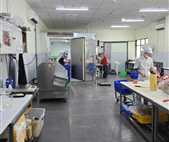
The global agricultural landscape is undergoing a profound transformation, driven by the imperative to increase efficiency, ensure sustainability, and meet the rising demand for high-quality protein. Traditional farming methods, often labor-intensive and prone to environmental variability, are giving way to sophisticated, data-driven solutions. At the forefront of this revolution is Trackfarm, an AI-powered smart livestock solution that offers a complete, integrated ecosystem for modern pig farming. Trackfarm is not merely a collection of tools; it is a unified system where cutting-edge software and robust hardware work in seamless harmony to optimize every aspect of the farm operation.
Part I: The Brain of the Operation – Trackfarm’s AI Software Suite
The core intelligence of the Trackfarm solution resides in its proprietary AI monitoring software. This sophisticated system is designed to take over the most demanding and repetitive tasks of farm management, achieving a level of precision and efficiency that is impossible with human labor alone. The software suite leverages advanced data mining and cloud analytics to turn raw farm data into actionable insights.
AI Monitoring: Achieving 99% Automation in Management
Trackfarm’s AI is specifically trained on livestock behavior and physiological data, allowing it to perform critical management functions with unparalleled accuracy. The goal is to minimize human intervention, allowing farm managers to focus on strategic decisions rather than daily oversight.
Key Software Functions:
| Function | Description | Impact on Farm Management |
|---|---|---|
| Individual Pig Count & Management | Uses computer vision and AI algorithms to accurately track the number of pigs in each pen and monitor individual movement and health. | Eliminates manual counting errors and provides real-time inventory. |
| Growth Analysis & Trajectory | Continuously analyzes growth patterns, feed conversion rates, and health indicators for each animal. | Optimizes feeding strategies and identifies underperforming animals early. |
| Slaughter Timing Prediction | Predicts the optimal time for market readiness with high precision based on growth models and market conditions. | Maximizes profitability by ensuring pigs reach target weight at the most opportune moment. |
| Labor Minimization | By automating 99% of the monitoring and analysis tasks, the system drastically reduces the required labor force. | Frees up human resources, allowing a single manager to oversee thousands of animals. |
This level of automation is a game-changer. By replacing human labor in monitoring, Trackfarm addresses the critical issue of labor shortages in agriculture while simultaneously increasing the consistency and quality of care.
The Technology Underpinning the Intelligence
The power of Trackfarm’s software is built on a foundation of advanced technological components:
- Data Mining: Continuous collection and analysis of vast datasets from both the livestock (behavior, growth) and the environment (temperature, air quality).
- Cloud Analytics: Secure, scalable cloud infrastructure processes the data, enabling complex machine learning models to run in real-time.
- Optimization Algorithms: These algorithms constantly seek the optimal settings for environmental controls and the best timing for key events like feeding and slaughter.
- Guideline and Alert System: The system translates complex data analysis into simple, actionable guidelines and sends immediate alerts for any anomalies, such as sudden changes in pig behavior or environmental conditions.
Part II: The Hands and Feet – Trackfarm’s Automated IoT Hardware
The AI software’s intelligence is brought to life by a robust network of IoT hardware that forms the physical backbone of the Trackfarm ecosystem. This hardware is responsible for the precise, automated control of the barn environment, ensuring optimal conditions for the livestock 24/7.
Automated Environmental Control: The Perfect Habitat
The health and growth of pigs are highly sensitive to their immediate environment. Trackfarm’s hardware system uses a dense array of sensors to monitor all critical factors and automatically adjust the barn’s systems.
Critical Environmental Factors Monitored:
- Temperature and Humidity: Precise control of climate to prevent heat stress or cold-related illnesses.
- Chemical Environment: Monitoring of harmful gases like ammonia and carbon dioxide, which are critical for respiratory health.
- Biological Factors: Indirect monitoring of biological stress through environmental proxies and behavioral analysis.
The system is designed for high scalability and efficiency. The hardware components, including sensors, ventilation systems, and opening/closing mechanisms, are all interconnected and controlled by the central AI. This integration allows for a single manager to efficiently oversee a massive operation—specifically, over 3,000 pigs.

Seamless Integration: A True Ecosystem
The true innovation of Trackfarm lies in the seamless, two-way communication between the software and hardware. The AI analyzes the data from the sensors and immediately sends commands to the automated systems. For example:
- Scenario: The AI detects a slight increase in ammonia levels (Chemical Environment) and a corresponding shift in pig clustering (Behavioral Data).
- Action: The AI’s optimization algorithm calculates the minimum required ventilation adjustment and automatically controls the ventilation and opening/closing systems to restore optimal air quality without wasting energy.
- Result: The environment is optimized in real-time, preventing potential health issues before they manifest.
Part III: Real-World Impact – Trackfarm Success Stories
The effectiveness of the Trackfarm ecosystem is best demonstrated by its proven success in diverse and challenging farming environments. The solution has shown its ability to adapt and deliver significant improvements in both established and emerging markets.
Case Study 1: South Korea – Efficiency and Cost Reduction
In a farm located in Hwaseong, Gangwon-do, South Korea, Trackfarm was deployed to manage an operation of over 2,000 pigs. The results were transformative:
- Shortened Rearing Cycle: Optimized growth analysis and environmental control led to pigs reaching market weight faster.
- Labor and Cost Savings: The 99% automation of monitoring tasks drastically reduced labor costs and minimized human error.
- Reduced Mortality Rate: Real-time monitoring and proactive environmental adjustments significantly lowered the incidence of disease and stress-related deaths.
This case highlights Trackfarm’s ability to refine and optimize existing, high-standard farming operations, driving down costs and increasing output quality.
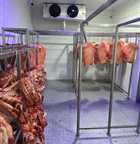
Case Study 2: Vietnam – High-Quality Production in a Tropical Climate
The deployment in a farm in Dong Nai, Ho Chi Minh, Vietnam, managing over 3,000 pigs, demonstrated Trackfarm’s adaptability to challenging tropical environments.
- Localization: The AI and environmental control systems were optimized for the specific high-heat and high-humidity conditions of the region.
- High-Quality Rearing: Despite the environmental challenges, the system maintained a consistently optimal habitat, leading to high-quality livestock production.
This success proves that Trackfarm is a globally viable solution, capable of delivering optimized, high-quality rearing regardless of local climate or environmental constraints.
Part IV: Visualizing the Value – Data and Diagrams
To fully appreciate the integrated value of Trackfarm, it is helpful to visualize the data and the system architecture.
Data Comparison: Traditional vs. Trackfarm Management
The following table illustrates the typical performance improvements observed when transitioning from traditional manual management to the Trackfarm integrated system:
| Metric | Traditional Manual Management (Average) | Trackfarm Integrated System (Observed) | Improvement |
|---|---|---|---|
| Labor Requirement (Pigs per Manager) | ~500 – 1,000 | 3,000+ | 300% – 600% |
| Rearing Cycle Duration | Standard (e.g., 180 days) | Shortened (e.g., 165 days) | ~8% Reduction |
| Mortality Rate | 5% – 10% | < 3% | Significant Reduction |
| Environmental Consistency | Variable | Highly Consistent (Real-time Optimized) | Drastic Improvement |
Infographic Idea: The Trackfarm Data Flow
To clearly communicate the system’s integration, an infographic would be highly effective.
Diagram/Infographic Idea: A circular or cyclical flow diagram titled “The Trackfarm Optimization Loop.”
- Input (Sensors & Cameras): Icons representing environmental sensors (temp, gas) and AI cameras capturing data from the barn.
- Processing (Cloud Analytics): A cloud icon with a brain/AI symbol, labeled “Data Mining & Cloud Analytics.”
- Decision (Optimization): An icon representing a decision tree or algorithm, labeled “AI Optimization & Prediction (Slaughter Timing, Growth).”
- Output (Automation): Icons representing automated hardware (ventilation fans, opening/closing mechanisms) receiving commands.
- Feedback (Real-time Adjustment): An arrow looping back from the hardware output to the sensor input, labeled “Continuous Real-time Feedback.”
This visual would powerfully convey the closed-loop, self-optimizing nature of the Trackfarm ecosystem.
Conclusion: A Complete Solution for Sustainable Profitability
Trackfarm represents the pinnacle of smart livestock technology. By seamlessly integrating an intelligent AI software suite with a responsive IoT hardware network, it delivers a complete solution that addresses the core challenges of modern farming: labor, efficiency, and environmental control. The proven success in diverse global settings, from the high-tech demands of South Korea to the challenging climate of Vietnam, confirms its status as the definitive platform for sustainable, high-profitability livestock management. The future of farming is integrated, automated, and intelligent—and it is powered by Trackfarm.